Drone Pilot Careers You Can Launch with a Certificate III in Aviation
- The Certificate III in Aviation (Remote Pilot) AVI30419 is a nationally recognised qualification.
- It pairs a CASA-approved RePL with job-ready theory and hands-on flight training.
- Surveying, AgTech, inspections and emergency services are all actively hiring pilots.
- Add a ReOC and you can run your own drone business, not just fly for someone else's.
Drones are reshaping industries across Australia — agriculture, construction, media, mining and emergency services among them. With that growth comes sustained demand for certified pilots who can operate safely, legally and professionally. If you're weighing up a drone career in 2026, the Certificate III in Aviation (Remote Pilot) — national code AVI30419 — remains the launching pad: a nationally recognised qualification built around the CASA-approved Remote Pilot Licence (RePL), with the theory and hands-on flying to back it up.
Why the Certificate III gives you a competitive edge
Commercial drone work requires formal certification — without a RePL, most professional flying is simply off-limits. The Certificate III wraps that licence inside a broader, nationally recognised qualification: mission planning, payload management, weather, airspace law and safety procedures, taught through both classroom theory and assessed flight sessions. When two candidates chase the same role, the one holding a national qualification alongside their licence starts in front.
- CASA-approved Remote Pilot Licence (RePL) — the legal foundation for paid drone work.
- Structured theory plus hands-on flight training with real mission planning.
- A nationally recognised qualification (AVI30419) employers can verify Australia-wide.
Surveying and mapping
Drones have transformed land surveying. With precise GPS and imaging, they're used for geospatial mapping, construction planning and mining-site analysis, and demand runs high across infrastructure projects, urban development and remote operations. Training that covers airspace compliance, flight planning and data capture prepares you to step into these roles from day one.
Aerial photography and videography
Real estate, tourism, events and film production keep a steady market for skilled camera pilots — aerial imagery sells, and clients pay for quality. The catch: you need a RePL to fly commercially, and the precision to operate safely near people and property. That's exactly what assessed practical training builds.
Agricultural drone operations (AgTech)
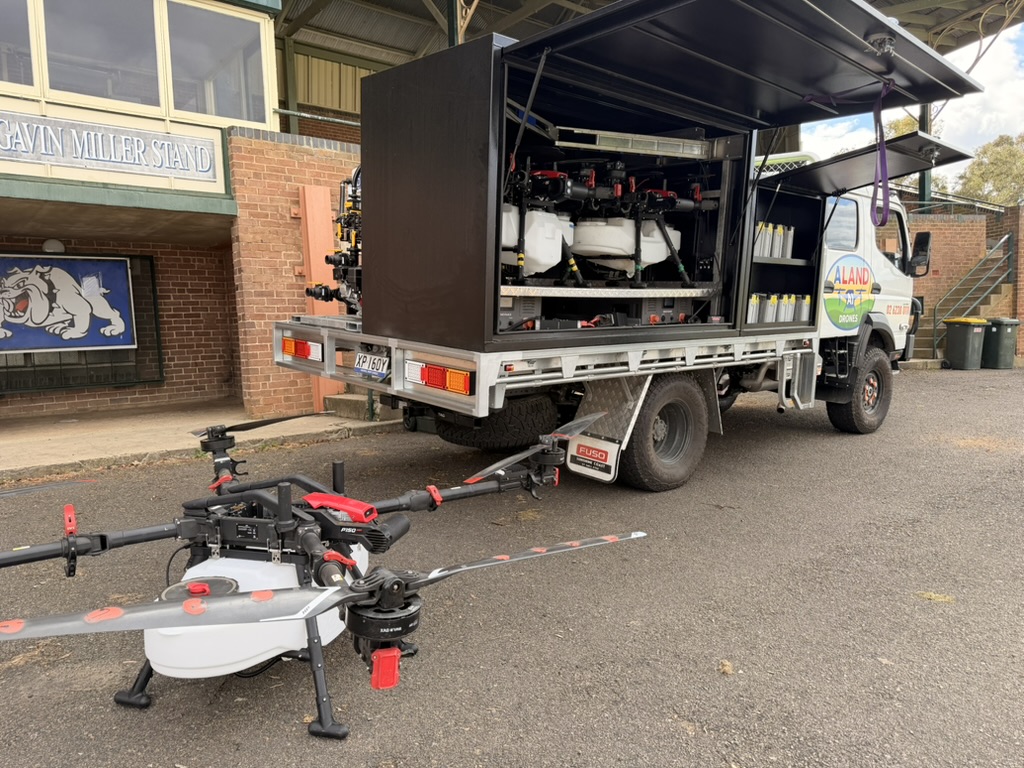
Precision agriculture is reshaping regional Australia: farmers and agribusinesses use drones to monitor crop health, apply inputs and assess irrigation. Pilots who can manage payload systems, map large properties and interpret aerial data have a real edge in rural job markets where skilled operators are scarce — and heavy spray drones like the XAG P150 Max open a further medium-category pathway.
Asset inspection and maintenance
Rooftops, power lines, solar farms and wind turbines used to demand scaffolding, cranes or helicopters. Drones now do that work faster and more safely — but the pilots doing it need airspace knowledge, risk-assessment discipline and a strong safety mindset, all core parts of Certificate III training.
Emergency services and search & rescue
Disaster response, bushfire surveillance, flood monitoring and search-and-rescue operations increasingly rely on rapid aerial views. Government departments, NGOs and emergency services look for pilots trained in risk management, situational awareness and flight logging — and pilots with an Aeronautical Radio Operator Certificate (AROC) who can work on aviation radio near controlled airspace are especially valuable.
Environmental monitoring and conservation
Researchers use drones to track wildlife, assess bushland and monitor coastal erosion, often in partnership with universities, environmental groups and local councils. These roles reward pilots who understand not just how to fly, but how to collect and interpret environmental data responsibly.
Freelance work and drone business ownership
Many pilots go out on their own, offering photography, inspection or mapping services. To hold your own CASA approvals and employ other pilots, you'll want a Remote Operator's Certificate (ReOC) for the business — and support navigating licensing, insurance and client acquisition makes the jump far less daunting.
See where licensed pilots are actually getting hired — and what they're earning — in our drone jobs guide.
Explore drone careers & jobsHow to get started
The drone industry keeps growing, and certified pilots are the ones catching the opportunities. ACE Aviation's CASA-certified training pairs the RePL with real-world mission training, AROC radio certification and business guidance, delivered in Brisbane, Sydney, Melbourne, Perth and across Australia. Call 1300 336 366 or 0468 682 525 or explore the training packages to take the first step.
Training runs regularly in every major city — find your nearest location and upcoming dates.
Find training in your cityFrequently asked questions
Yes — AVI30419 Certificate III in Aviation (Remote Pilot) remains the current nationally recognised qualification listed on training.gov.au, and it's the code employers and training providers use Australia-wide.
Written by the ACE Aviation team — CASA-approved instructors who have trained 4,000+ commercial drone pilots across Australia. Rules change; always confirm current requirements with CASA.
Start your drone career
Train with one of Australia's most experienced drone academies and build a pathway into real commercial operations.