
Loading…
Choose whether to allow optional third-party analytics and advertising tracking. You can use our forms either way and change your choice from the privacy policy.
Build on the basic night operations training included in every general package with an instructor-led DJI Enterprise night-flying session, followed by a formal debrief and assessment.
$895
Real footage from an ACE night training session — navigation lights over an illuminated landing zone
60 min
Assessed session
30 min
Practical night flight
30 min
Debrief & assessment
80×80 m
Controlled training field
Training objectives
By the end of the session, the remote pilot should be able to:
This session assumes the site assessment, airspace review, risk assessment, aircraft inspection and crew briefing have been completed before training begins.
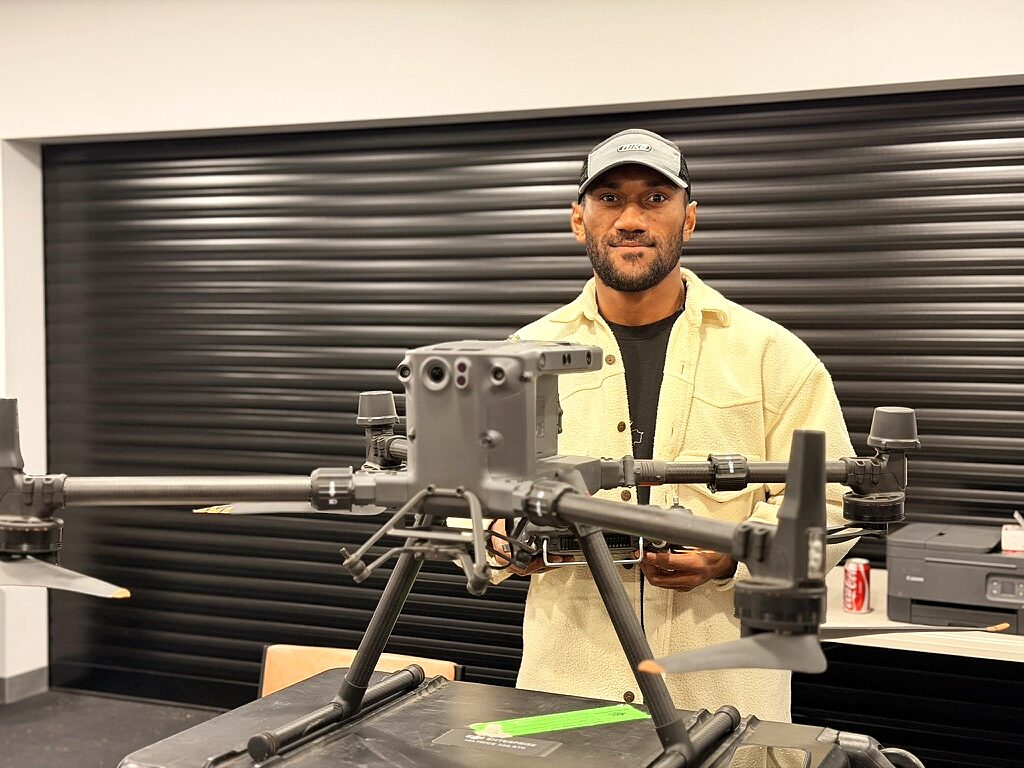 DJI Enterprise
Minute by minute
Every minute of the session is planned — from the first crew readiness call to the signed assessment record.
0–3 min
3–8 min
8–14 min
14–19 min
19–23 min
23–26 min
26–28 min
28–30 min
The flight may be ended early if visibility, battery level, weather, aircraft performance or pilot workload becomes unacceptable.
30–35 min
35–40 min
40–45 min
45–50 min
50–55 min
55–60 min
Field setup
Training runs on a controlled field approximately 80 × 80 metres or larger, adjusted for the aircraft, environment and operational risk assessment.
Clear of trees, wires, poles, structures and other obstacles
Minimum 10 × 10 metres, marked with four illuminated cones
Approximately 10–15 metres from the landing zone
Beside the student, with immediate access to the controls
Adjacent to the pilot with an unobstructed view of the operating area
Box pattern approximately 30 × 30 metres
A clearly identified secondary landing location
Uninvolved people kept at least 30 metres away, or farther where required by the risk assessment
Low-output, downward-facing lighting is used around the pilot station and landing zone. Lights must not shine toward the remote pilot, observer or aircraft.
Equipment
Crew
Night flying is a crew exercise — every seat has a defined job before the aircraft leaves the ground.
Pre-flight
Before starting the practical flight, the crew confirms:
Obstacle sensing and vision-positioning systems may perform differently in darkness. The pilot must not rely on these systems as the primary means of obstacle avoidance.
Sign-off
In the final assessment, the instructor records whether the student demonstrated:
In Australia, night operations generally require an appropriate ReOC framework and a suitably licensed remote pilot. The operator must train and test its remote pilots, retain training records, conduct an operational risk assessment and maintain documented night-operating procedures.
This training session supports operator competency and record-keeping requirements. Completion of the session does not independently authorise a person to conduct night operations.
Need the ReOC side sorted? ReOC Setup & ConsultationQuestions
No. In Australia, night operations generally require an appropriate ReOC framework and a suitably licensed remote pilot. This session supports the operator's competency and record-keeping requirements — completion does not independently authorise night operations. ACE Aviation can help you understand and work toward the full requirements.
It's a 60-minute assessed session: a 30-minute practical night flight followed by a 30-minute debrief and assessment. The session assumes the site assessment, airspace review, risk assessment, aircraft inspection and crew briefing have been completed before training begins.
DJI Enterprise platforms — a suitable DJI Enterprise drone with a compatible DJI Enterprise controller, approved batteries and, where required, an appropriate enterprise payload.
The flight may be ended early if visibility, battery level, weather, aircraft performance or pilot workload becomes unacceptable — safe judgement is part of the assessment.
Advanced Night Operations — $895.
Completion of this session does not independently authorise night operations — see the authorisation note above.